
PPWR, GS1 Digital Link and the Rise of Connected Packaging

PPWR, GS1 Digital Link and the Rise of Connected Packaging
Packaging has traditionally had three main jobs: protect the product, identify it and communicate essential information.
Increasingly, it has a fourth: connecting the physical product to digital information.
Two developments are helping to drive that change in Europe: the EU’s Packaging and Packaging Waste Regulation (PPWR) and the wider adoption of GS1-powered 2D codes and GS1 Digital Link.
They are not the same thing, and PPWR does not require manufacturers to adopt GS1 Digital Link. However, both point towards a future where QR codes and other digital data carriers play a much greater role on packaging.
For manufacturers, that creates new considerations around coding, data management, automation and code verification.
PPWR introduces a greater role for digital information
PPWR generally began applying across the EU on 12 August 2026, with further requirements being introduced progressively over the coming years.
One area directly relevant to industrial coding is the use of digital data carriers.
Under PPWR, reusable packaging will eventually need to provide additional information about reuse through a QR code or another standardised, open digital data carrier. This can include information about the reuse system and can facilitate tracking of packaging and the calculation of trips and rotations. The reusable-packaging labelling requirements are scheduled to apply from 12 February 2029, or later where specified implementing legislation takes longer to enter into force.
PPWR also allows digital data carriers to provide additional information relating to packaging and its correct sorting.
For manufacturers, this means the QR code on a pack could increasingly have an operational role rather than simply being used for marketing.
GS1 Digital Link takes this further
At the same time, GS1 is supporting the global transition from traditional linear barcodes towards more capable 2D barcodes, including QR Codes powered by GS1 and GS1 DataMatrix.
GS1 Digital Link provides a standardised way of expressing GS1 identifiers, such as a GTIN, within a web address.
This means the same identifier used to identify a product within the supply chain can also connect the physical product to online information and services.
Depending on the application, a 2D code can contain or reference information such as:
- Product identification
- Batch or lot information
- Serial numbers
- Expiry dates
- Traceability information
- Product instructions
- Recycling or sustainability information
- Consumer-facing digital content
GS1 2D codes can therefore support both supply-chain processes and digital experiences beyond the traditional barcode.
PPWR and GS1 Digital Link are not interchangeable
This distinction is important.
A manufacturer should not assume that adding a GS1 Digital Link QR code automatically satisfies a PPWR requirement, or that a PPWR QR code must use GS1 Digital Link.
The required data, code structure and technical rules need to be considered for the individual application.
However, there is an obvious opportunity for manufacturers to avoid covering packaging with multiple competing codes where standards and regulations allow information to be combined effectively.
That makes data strategy increasingly important alongside packaging design.
Before adding another QR code, manufacturers should be asking:
- What information needs to be encoded directly?
- What information should be accessed online?
- Does the code need to identify the individual product, batch or packaging asset?
- Which systems generate and manage that information?
- Who needs to scan the code — production, logistics, retailers, consumers or recyclers?
- Can one data carrier support several legitimate use cases?
The challenge moves onto the production line
A connected package is only useful if its code works.
As manufacturers place more information into QR, DataMatrix and other 2D codes, print quality becomes increasingly important.
The individual modules within a 2D code must be produced consistently enough for scanners and cameras to decode them reliably.
That means manufacturers need to consider the entire process:
Production data → code generation → printing → inspection → rejection → traceability
The choice of printing technology also matters.
TIJ, CIJ, laser and high-resolution digital inkjet can all have a role depending on the packaging material, line speed, required resolution, code size and operating environment.
The final decision should therefore be based on trials using the actual substrate, intended code and genuine production speed, rather than simply selecting a printer because its specification states that it can produce QR codes.
Verification becomes increasingly important
There is also an important distinction between reading a code and verifying its quality.
A scanner may successfully read a 2D code while underlying print-quality issues mean that the same code could fail elsewhere in the supply chain.
GS1 recommends formal barcode verification where appropriate and provides guidance for evaluating 2D codes against ISO/IEC 15415 using compliant verification equipment.
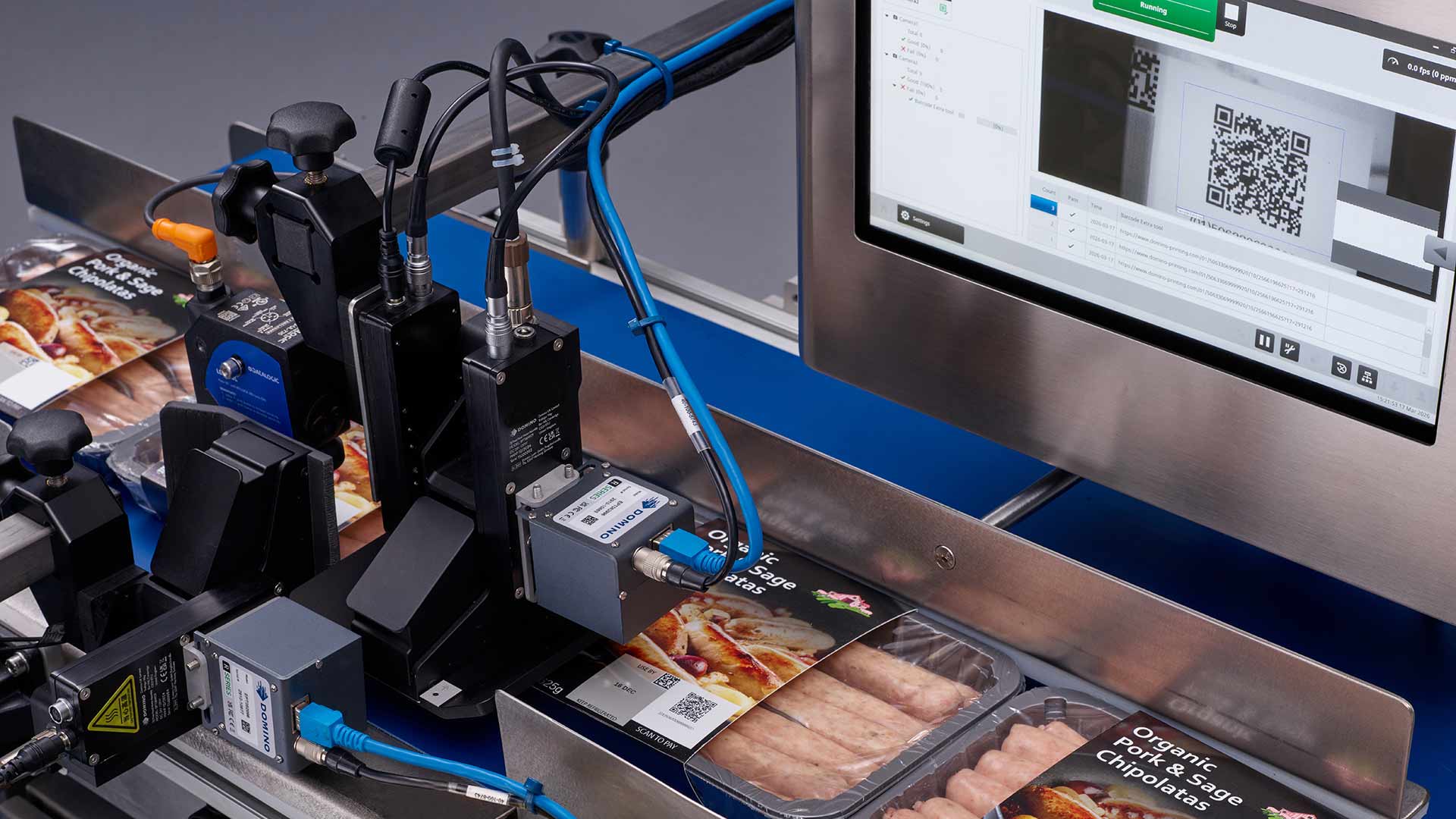
Inline machine vision can provide an additional production safeguard by checking every pack for issues including:
- Missing codes
- Incorrect codes
- Poor print
- Incorrect positioning
- Wrong variable data
- Unreadable codes
As packaging carries more valuable data, automated inspection becomes a much more important part of the coding process.
Packaging is becoming part of the digital supply chain
PPWR is primarily about improving the sustainability and circularity of packaging.
GS1 Digital Link is primarily about connecting GS1 identifiers with digital information.
But from a manufacturer’s perspective, both developments highlight the same wider trend:
Packaging is becoming a connected source of data.
The implications go beyond simply changing a barcode.
Manufacturers need reliable ways to create the correct data, send it to the production line, print it accurately, verify the result and ensure the information remains useful throughout the product or packaging lifecycle.
Codico can help manufacturers assess their 2D-code requirements, select the appropriate coding technology and integrate automated code inspection and verification.
Contact Codico to discuss your connected-packaging application or arrange a live 2D coding and vision demonstration.
PPWR and GS1 standards contain distinct requirements. Manufacturers should confirm the regulatory and standards requirements applicable to their individual products and markets.