
PPWR and Industrial Coding: What Manufacturers Need to Know

PPWR and Industrial Coding: What Manufacturers Need to Know
The EU Packaging and Packaging Waste Regulation, commonly known as PPWR, entered into force on 11 February 2025 and will generally apply from 12 August 2026. It aims to reduce packaging waste, improve recyclability and encourage greater use of reusable packaging across the EU.
For manufacturers, PPWR is primarily a packaging regulation. However, changes to packaging materials, pack sizes and reuse requirements could have a direct impact on industrial coding, marking, labelling and code inspection.
New packaging materials can affect coding performance
As manufacturers introduce more recyclable materials, recycled-content plastics, mono-material films and fibre-based packaging, they will need to confirm that their existing coding equipment remains suitable.
Industrial coding performance can vary significantly between substrates. Changes in surface texture, colour, permeability and surface energy may affect:
- Ink adhesion and drying time
- Print contrast and durability
- Barcode and 2D code readability
- Laser-marking quality
- Performance in wet, refrigerated or high-speed environments
Domino highlights that the permeability and adhesion properties of new packaging materials can affect print quality, durability and colour intensity. These materials should therefore be thoroughly tested before being introduced into full production.
Manufacturers should avoid assuming that a printer, laser or ink that works on an existing pack will perform identically on its replacement.
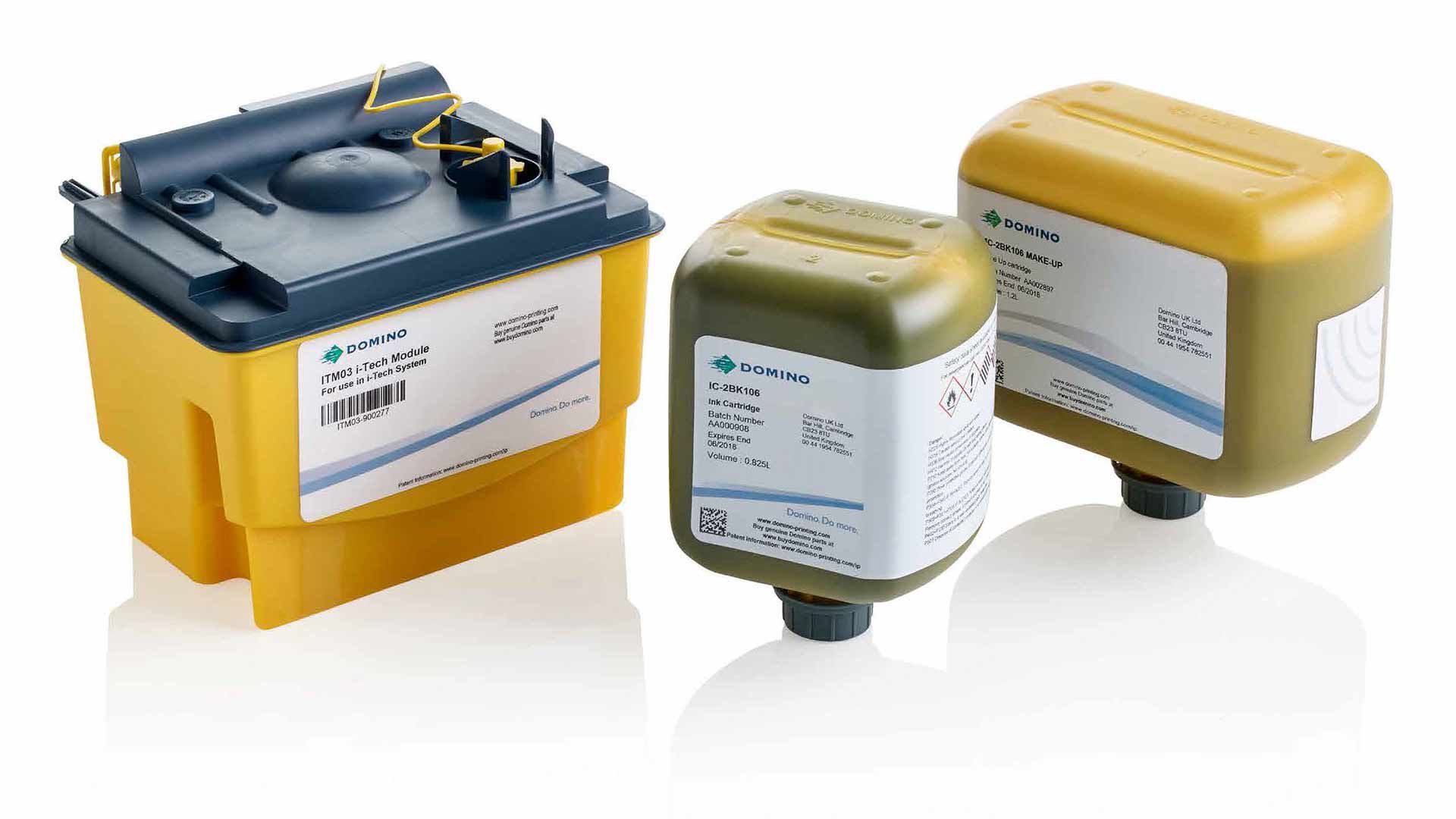
Printing inks form part of the recyclability discussion
Coding and printing inks represent only a small proportion of a finished pack, but they still need to be considered as part of its overall recyclability.
The challenge is to balance several requirements. A code must remain clear, durable and readable throughout the product’s expected lifecycle, while the ink must also be compatible with the packaging material and its intended recycling process.
Depending on the application, manufacturers may need to consider:
- The amount of ink applied to the packaging
- Whether the ink can be removed during washing or de-inking
- Whether pigments, varnishes or coatings interfere with recycling
- Compatibility with food-packaging requirements
- Whether direct printing could replace an additional label
Domino notes that large areas of print, certain pigments and UV varnishes can make recycling processes less effective. Greater collaboration will therefore be needed between packaging suppliers, ink developers, coding specialists and manufacturers.
Reusable packaging creates new coding challenges
PPWR also supports greater packaging reuse. This could create different coding requirements for reusable bottles, containers, crates, trays and transit packaging.
Permanent information, such as branding, asset identification or a tracking code, may need to withstand repeated handling and high-temperature washing.
Variable information, including batch numbers, production dates and expiry dates, may need to be removed before the packaging is used again.
Manufacturers may therefore require a combination of:
- Durable permanent markings
- Removable or washable variable codes
- Labels that can be removed and replaced
- QR or 2D codes for asset tracking and returns
- Systems capable of assigning and managing unique packaging identities
Domino suggests that ink formulations for reusable packaging will need to balance durability with de-inkability. Permanent information may require highly durable inks, while product-specific variable information must be easy to remove before the next use cycle.
There is unlikely to be one coding method that suits every reusable packaging application. The correct solution will depend on the material, washing process, required code life and how the packaging is tracked.
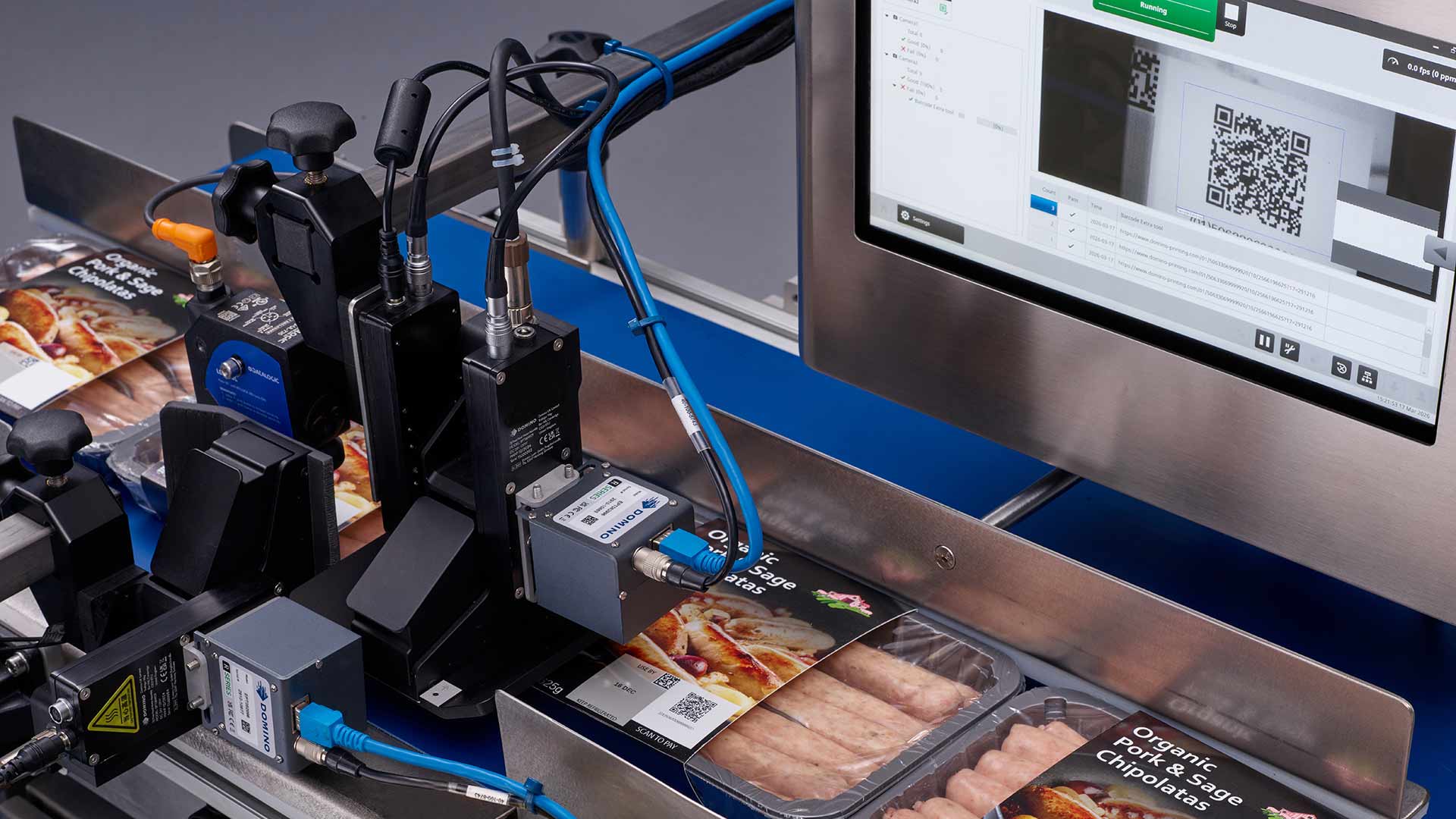
Smaller packs could increase the role of 2D codes
PPWR includes measures intended to reduce unnecessary packaging weight and volume. As packaging becomes smaller or more lightweight, manufacturers may have less printable space available for product, regulatory and consumer information.
QR codes, DataMatrix codes and GS1-powered 2D codes can help manufacturers make better use of this limited space by connecting a physical pack to additional digital information.
Direct-to-pack printing may also become more attractive where it can replace a separate label or reduce the amount of packaging material required. Domino identifies direct-to-shape inkjet printing and GS1-powered QR codes as potential ways to reduce ink and label use while providing access to more information.
However, more complex 2D codes require consistently high print quality. A code must remain readable throughout manufacturing, handling, storage and distribution.
Codico’s Code Check Vision Inspection can help manufacturers verify:
- Code presence
- Correct product and variable data
- Code position and alignment
- Print quality
- Barcode or 2D code readability
What should manufacturers do now?
Manufacturers planning packaging changes should involve their coding and marking suppliers early in the process.
Before approving a new material or pack format, businesses should:
- Test the proposed packaging using the actual production printer, ink or laser.
- Confirm that codes remain readable at normal production speeds.
- Assess adhesion, drying time, contrast and durability.
- Test performance under realistic handling, refrigeration, moisture and washing conditions.
- Review whether permanent, removable or combined coding is required.
- Confirm that existing equipment can produce and verify the required 2D codes.
- Consider whether direct printing could reduce reliance on labels.
Prepare the production line as well as the packaging
PPWR may begin as a packaging-development project, but its effects will extend directly to the production line.
New substrates can affect ink performance. Smaller packs can reduce available printing space. Reusable containers can require both permanent and removable codes. More complex 2D codes can increase the need for automated verification.
Codico can help manufacturers test new packaging materials, select suitable coding or marking technology, and integrate automated code verification before packaging changes are introduced across production.
Contact Codico to discuss your packaging application or arrange a live coding and vision demonstration.
This article provides a practical industry overview and should not be considered legal or regulatory advice.